Alaska Arctic Plant Communities

3. Luzula confusa-Poa arctica

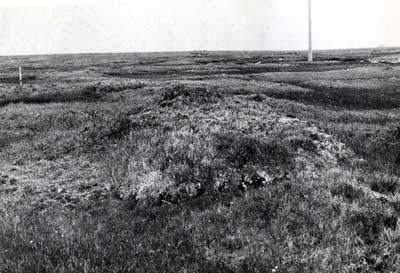
Photo A. Mesic <em>Luzula confusa</em>-<em>Poa arctica</em> community on a high-centered polygon at the Barrow IBP study site. This community was described as Nodum I (dry <em>Luzula confusa</em> heath) in Webber (1978). Webber et al. 1978, Fig. 4. D.A. Walker.

Photo A. Mesic Luzula confusa-Poa arctica community on a high-centered polygon at the Barrow IBP study site. This community was described as Nodum I (dry Luzula confusa heath) in Webber (1978). Webber et al. 1978, Fig. 4. Photo D.A. Walker.
Enlarge image.

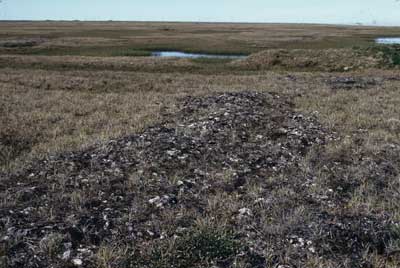
Photo B. <em>Luzula confusa</em>-<em>Poa arctica</em> subtype <em>Ochrolechia frigida</em> on rims of low centered polygons. Walker slide 74-44-17. D.A. Walker.

Photo B. Luzula confusa-Poa arctica subtype Ochrolechia frigida on rims of low centered polygons. Walker slide 74-44-17. Photo D.A. Walker.
Enlarge image.

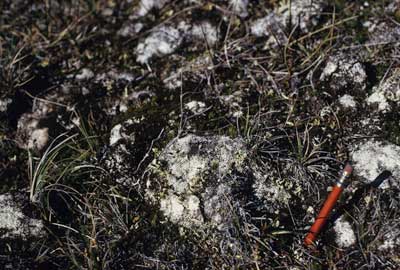
Photo C. Close up of the <em>Ochrolechia frigida</em> subtype. Note the abundant cover of the lichens white crustose lichen <em>Ochrolechia inequatula</em> that cover hummocks of the moss <em>Dicranum elongatum</em>. Walker slide 74-44-16. D.A. Walker.

Photo C. Close up of the Ochrolechia frigida subtype. Note the abundant cover of the lichens white crustose lichen Ochrolechia inequatula that cover hummocks of the moss Dicranum elongatum. Walker slide 74-44-16. Photo D.A. Walker.
Enlarge image.

Bioclimate Subzone: C

Floristic Subprovince: Northern Alaska

Substrate Chemistry: Acidic

Position along mesotopographic gradient: Moist site

Summary of Habitat: Mesic organic-rich acidic coastal tundra in subzone C

Described from: Barrow (Webber 1978)


Common plant functional types and species:

Rush: Luzula confusa; Luzula arctica;

Grass: Poa arctica; Dupontia fisheri; Hierochloe alpina;

Sedge: Carex aquatilis; Eriophorum angustifolium ssp. triste;

Prostrate dwarf shrubs: Salix rotundifolia;

Forb: Potentilla nana; Pedicularis lanata; Saxifraga foliolosa;

Lichen: Sphaerophorus globosus; Dactylina arctica; Alectoria nigricans; Cladonia spp.; Ochrolechia frigida;

Moss: Polytrichastrum alpinum; Dicranum elongatum; Polytrichum strictum; Sarmenthypnum sarmentosum;


General Comments:

  • This may be the zonal vegetation for subzone C in coastal habitats of northern Alaska, but it does not occur widely and is poorly characterized at present due to lack of relevés from large homogenous stands. The type occurs on mesic organic-rich soils. It is characterized by an abundance of rushes (Luzula confusa and Luzula arctica), grasses (Poa arctica, Dupontia fisheri, Hierochloe alpina) and lichens (photo a).
  • This type is distinguished from Community 1 by its greater abundance of graminoids, particularly rushes (Luzula confusa, Luzula arctica), and grasses (Poa arctica, Dupontia fisheri), and somewhat moister more organic-rich soils. It is distinguished from Community 2 by the abundance of rushes (Luzula confusa and Luzula arctica). It occupies only a small portion of the larger region in subzone C and is not distinguishable as a separate map unit on the Arctic Alaska Vegetation Map (Raynolds et al. 2006).
  • Subtype Ochrolechia frigida occurs mainly on organic-rich high-centered polygons, low-centered polygon rims, and other somewhat elevated microsites in ice-wedge polygon complexes (photos b and c). The soil has a white lumpy appearance due to moss polsters of Dicranum elongatum covered by the white lichen Ochrolechia spp. At Prudhoe Bay and Barter Island this subtype is replaced by a similar community that has abundant Dryas integrifolia and Ochrolechia frigida.


Other names from the Alaska literature:


Braun-Blanquet Name:

  • Undescribed as an association in Alaska. May fit within the Alliance Luzulion nivalis (Nordh, 1936).